CONVERSATIONS / Books / FILM & TELEVISION
The Best Man: Unfinished Business Is Asking What Comes After Happily Ever After
The Best Man: Unfinished Business Is Asking What Comes After Happily Ever After
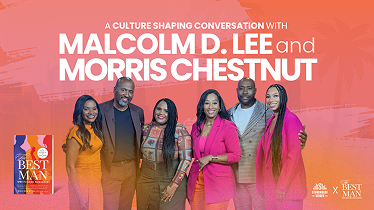
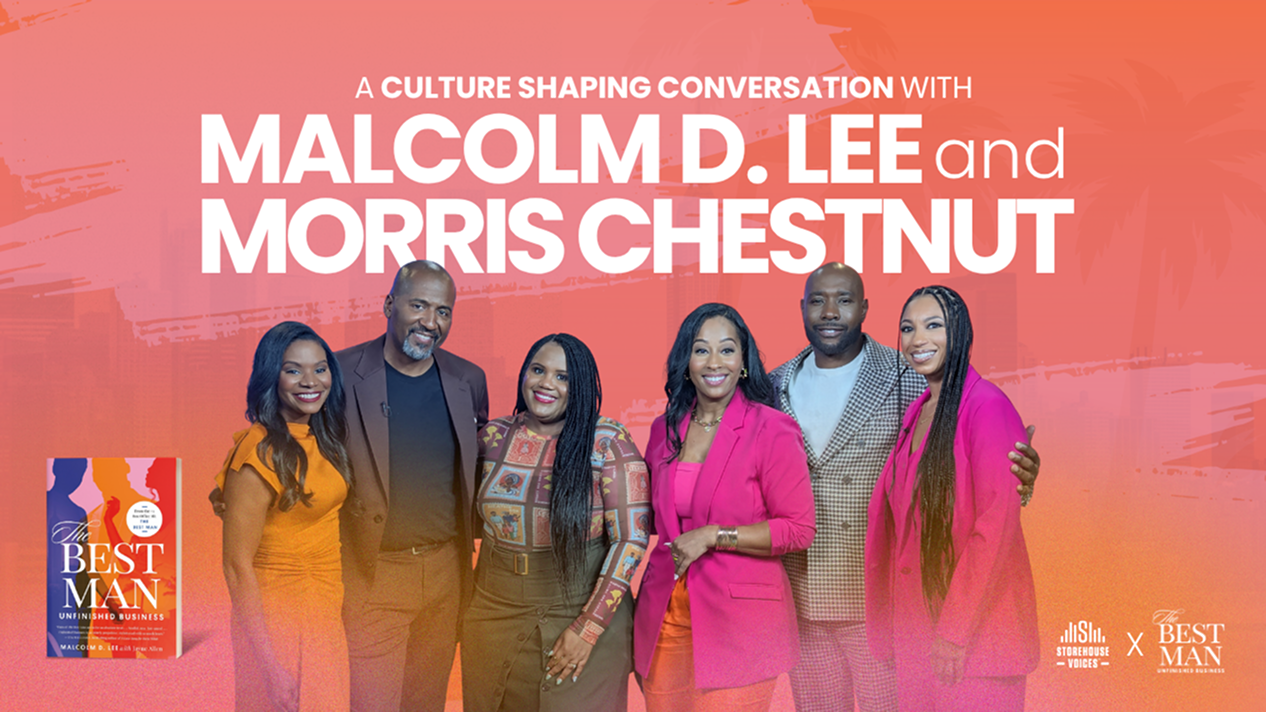
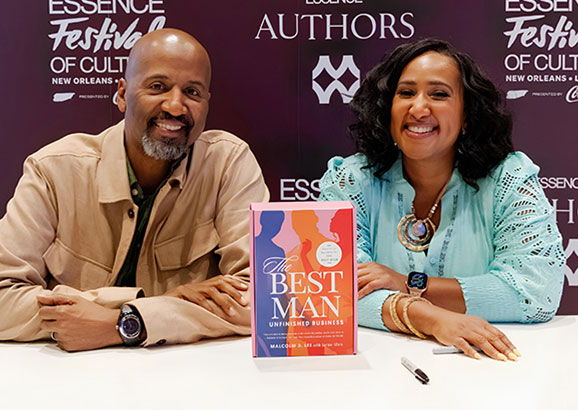
More than 25 years after audiences first met Harper, Jordan, Robyn, Lance and their friends, Malcolm D. Lee and Morris Chestnut join Storehouse & Friends to discuss The Best Man: Unfinished Business, and what happens when beloved characters reach the complicated middle of life.
Storehouse & Friends | September 26 | 10 min read
SHARE
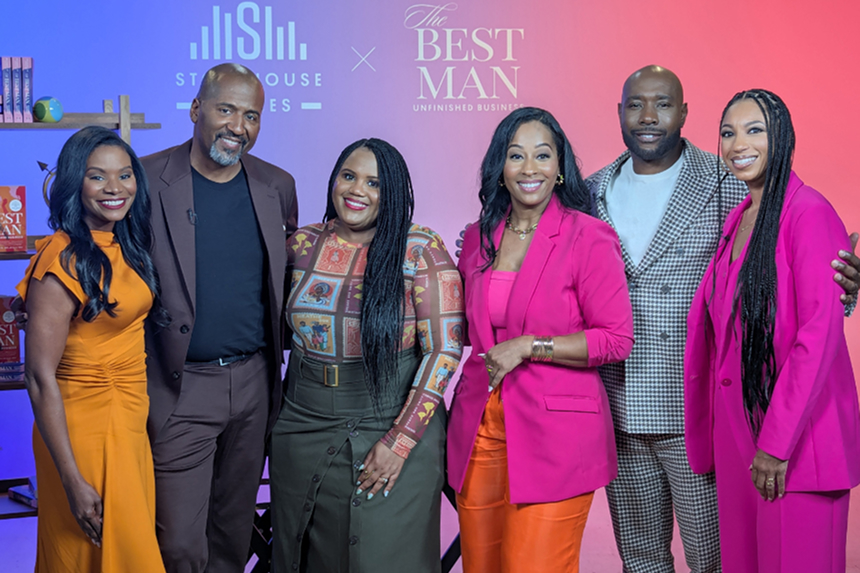
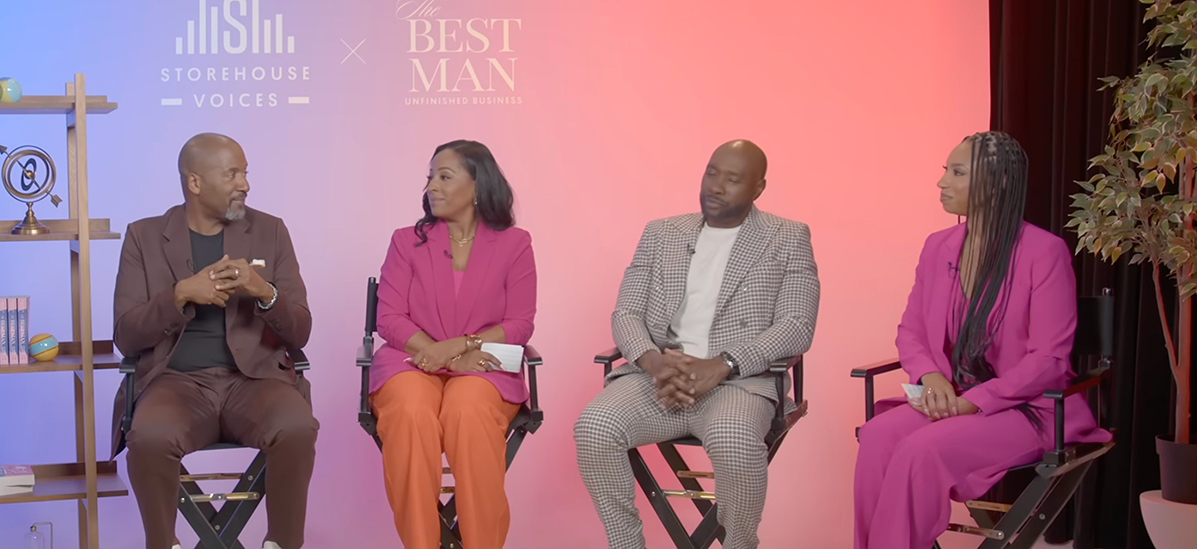
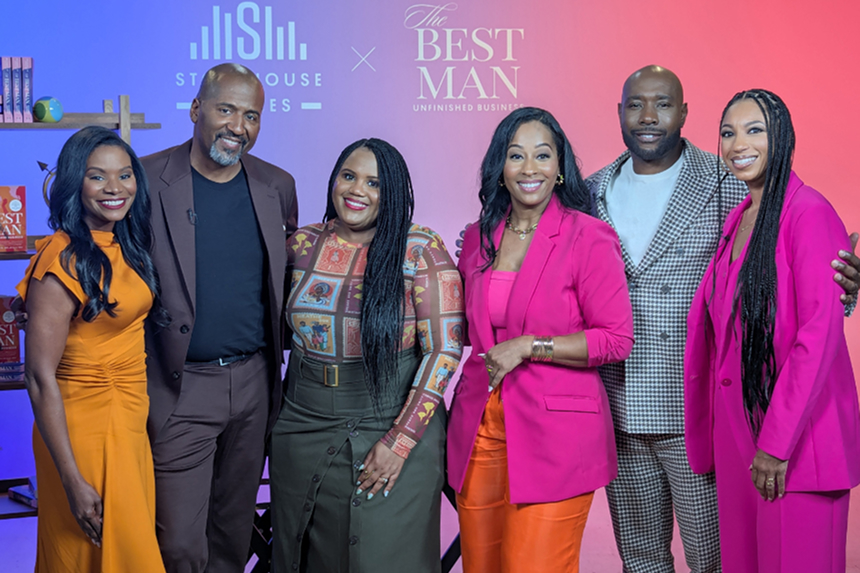
Malcolm D. Lee and Morris Chestnut join Storehouse & Friends to discuss the next chapter of The Best Man.
What It Means To Choose Yourself
Robin’s decision to leave her marriage and move to Ghana provoked strong reactions when The Final Chapters aired. Lee noticed. He also understood why the response interested him. Both Robin and Jordan had done something he says viewers do not always expect Black women to do.
They chose themselves. “I think it’s kind of revolutionary for Black women to do that,” Lee says. For Robin, the choice was not simply geographical. Lee describes her as disillusioned with her marriage and with America itself.
She wanted something different. Ghana offered the possibility of belonging somewhere she felt welcomed, although Lee makes clear the move did not become an uncomplicated fantasy. Robin experienced a reality check. She had to settle into the actual place rather than the place she imagined.
But she remained. Lee wanted the book to give her more opportunity to explain what viewers had already watched her do. The same impulse shapes Jordan’s story. One passage, written by Jayne Allen and read aloud by Lee during the conversation, finds Jordan looking at a group of young women and wishing she could warn them about what ambition can take.
Success, she has learned, can come with regret. Corporations will accept everything a person gives them and continue asking for more. Jordan wants the women to set boundaries. Take weekends.
Protect friendships. Make self-care mean something. The passage works because Jordan is not speaking theoretically. She knows the cost of building an identity around achievement.
Eventually, she reaches a different conclusion. “I choose me.” That choice does not erase ambition. It changes where she places herself within it.
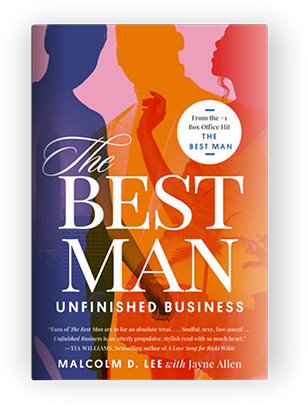
“Everyone has to grow. They don’t necessarily mature.”
Malcolm D. Lee
Watch the conversation
Malcolm D. Lee & Morris Chestnut on Growing Up With The Best Man
Tamira Chapman joins Malcolm D. Lee and Morris Chestnut for a conversation about midlife, marriage, ambition, friendship and what happens after happily ever after.
MORE FROM STOREHOUSE &FRIENDS

The Malcolm X You Were Never Taught
11 MIN READ
The Malcolm X You Were Never Taught
11 MIN READ
“I choose me.”
Jordan Armstrong / The Best Man: Unfinished Business
Watch the conversation
Malcolm D. Lee & Morris Chestnut on Growing Up With The Best Man
Tamira Chapman joins Malcolm D. Lee and Morris Chestnut for a conversation about midlife, marriage, ambition, friendship and what happens after happily ever after.
The Back Half Of A Life
When The Best Man began, its characters were young adults trying to figure out love, friendship and the beginning of their careers. Lee is now interested in what comes later. Not simply aging. Reassessment.
“Everyone has to grow,” he says. “They don’t necessarily mature.” The distinction carries much of the novel. Life changes people regardless of whether they become wiser at the same speed.
The first film dealt with beginnings. Marriage. Career. Adulthood arriving.
By The Best Man Holiday, the problems were heavier. Children. Mortality. Financial pressure.
Fertility. Now another set of questions has arrived. What does the second half look like? Am I still supposed to be with this person?
Do I still want this career? This city? This country? This version of myself?
Lee sees those questions reflected not only in the characters, but in his own life and the lives of people around him. He also acknowledges that some of Harper and Jordan’s ambition comes from him. Both characters have spent years placing career near the center of their identities. Harper, unlike Lee, loses his family along the way.
He gets the professional recognition. The money. The success. Then he is alone.
The novel leaves him asking whether the decisions that brought him there were worth what they cost. Lee recognizes part of himself in that drive. “I’ve certainly been guilty of putting career ahead of everything else,” he says. Age has not removed ambition from the story.
It has simply introduced the invoice.
Age has not removed ambition from the story. It has made the cost easier to see.
-Storehouse & Friends
Love, Intention and Impact
No character produces more debate during the conversation than Harper. Lee repeatedly finds himself defending him. The women at the table are less interested in letting him off easily. The argument eventually becomes about something larger than one fictional man.
Does good intention matter when the impact still hurts someone? Lee says Harper does not deliberately set out to harm the people around him. He wants love. He leads with his heart.
He tries. But trying does not always make the consequences disappear. That becomes especially complicated in his relationships with Robin and Jordan. Lee describes Harper and Jordan as having shared an emotional pull for much of their adult lives.
But when Harper’s marriage ends, Jordan refuses to become the place where he lands simply because he is hurting. “You’re on a rebound right now,” Lee recalls of Jordan’s position. “You want a soft place to land and I can’t be that.” The writers used another framework to understand why the relationships operate differently.
The flower and the gardener. Harper is a flower. Jordan is a flower. Robin is a gardener.
Robin knows how to nurture Harper. The more difficult question is whether she receives the same care in return. That imbalance sits close to the reason her departure matters. Fantasy complicates things further.
Harper and Jordan may have chemistry. History. Possibility. But Lee returns to another question.
“Is the fantasy going to match reality?” Sometimes the person who appears most desirable is not the person who knows how to stand beside you when life collapses. Robin had already done that. For Lee, crisis reveals something fantasy cannot.
Who actually has your back?
“Is the fantasy going to match reality?”
-Malcolm D. Lee
What Friendship Owes You
The Best Man has always treated friendship as more than background. The men tease one another. The women carry history with one another. People interfere.
They protect. They know things spouses sometimes do not. But longevity creates another obligation. Accountability.
During the conversation, Harper’s friends become evidence in a larger debate about whether men truly hold one another responsible. Lee insists they do. By the end of the novel, he says, Harper is not allowed to simply follow every impulse without challenge. His friends question whether he is ready.
They put pressure on him. “There is accountability and good friends will do that,” Lee says. Morris Chestnut approaches the same idea more cautiously. Asked what advice he would give Harper, Chestnut resists offering easy instructions.
He says he takes advice seriously because isolated moments rarely tell the whole story. He wants context. History. More information.
Only then does he feel prepared to tell someone what he thinks. That instinct reflects the way Chestnut talks about his own life too. He attributes the longevity of his career partly to treating people with respect and refusing to become consumed by the mythology of Hollywood. His ambitions were relatively simple.
Work. Family. Stability. He remembers wanting a career that would allow him to attend his son’s football games because his own father, a blue-collar worker, could not always attend his.
“I just wanted to have a strong family,” Chestnut says. That orientation helped keep the industry in perspective. Work mattered. Then he went home.
“There is accountability and good friends will do that.”
-Malcolm D. Lee
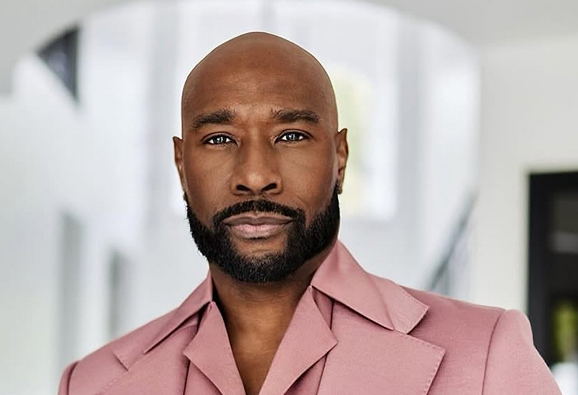
“I just wanted to have a strong family.”
-Morris Chestnut
Growing Older With the People We Met Young
Chestnut says Lance remains one of the characters to whom he feels most emotionally connected. Part of that comes from the experiences behind the scenes. He remembers projects through what happened while making them and what the characters required from him emotionally. Lance asked for a great deal.
Faith. Family. Loss. Grief.
Brotherhood. Those experiences stayed with him. They have also stayed with audiences. Lee says readers arrive at the new book intensely invested in what these characters do next.
They argue with them. They put the book down. They scream at decisions. They insist they would behave differently.
Then Lee asks them to imagine themselves inside the situation. “I would never do that,” people say. His response is more complicated. “You might.”
Literature creates enough distance for certainty. Life removes it. Timing matters. Emotion matters.
How much truth a person is prepared to hear matters. That may be one reason these characters have remained useful to Lee for so long. They can make bad choices without becoming bad people. They can grow without arriving.
They can repeat themselves. They can surprise the person writing them. Lee says he initially planned to resolve Harper, Robin and Jordan’s story in the first novel. The characters refused.
Their story now continues through the planned second and third books, while later installments widen toward Lance and Jasmine, Murch and Candace, Quentin and Shelby. Sometimes, Lee says, characters determine where the story has to go. Perhaps people do too.
A Conversation About More Than The Best Man
The Storehouse & Friends conversation with Malcolm D. Lee and Morris Chestnut is not really about whether Harper belongs with Robin or Jordan. It is about growing older. It is about ambition.
It is about marriage. It is about friendship. It is about choosing yourself after spending years being defined by what you give other people. And it is about discovering that adulthood does not eventually become a finished product.
Lee has lived with these characters for more than 25 years. He met them when they were beginning. Now he writes them in the middle. Old enough to understand consequences.
Young enough to make new mistakes. Successful enough to question whether success gave them what they expected. And connected enough that no decision belongs entirely to one person. That evolution is also tied to the legacy Lee says he hopes to leave.
He wants to elevate Black stories. To normalize Black life in America and beyond. To create work that feels mainstream without requiring Black people to become anything other than fully themselves. And someday, when the work is looked at as a whole, he hopes people can say something simple.
“You represented for us.” The Best Man: Unfinished Business extends that representation into another form. The screen gave audiences the weddings. The fights.
The reunions. The losses. The novel gets closer to what happens after people leave the room. What they regret.
What they still want. What they tell themselves. And what they are finally old enough to reconsider. Because after enough years, unfinished business becomes more than what remains between two people.
It becomes a question each person eventually has to answer for themselves:
What part of the life you built still needs your attention?
more from storehouse & friends
Style, Identity, and the Power of Self-Definition
11 MIN READ