
CONVERSATIONS / Books / LEADERSHIP
Inside Kamala Harris’s 107 Days
Inside Kamala Harris’s 107 Days
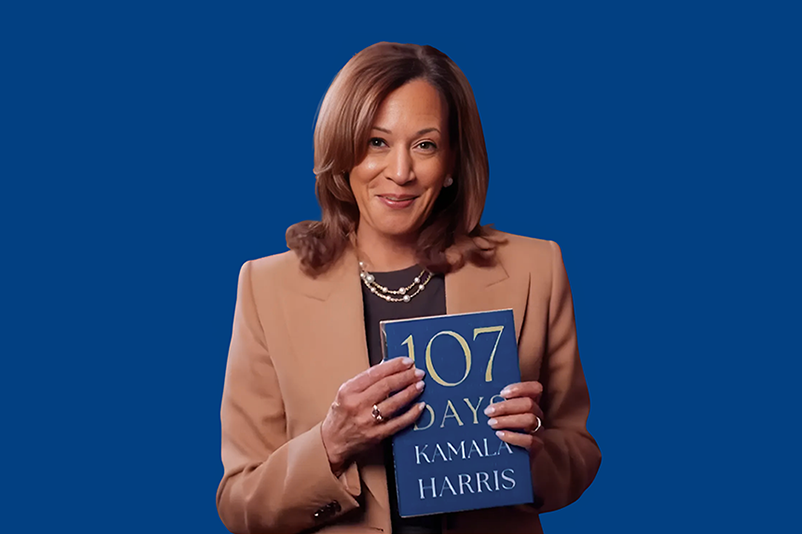
Former Vice President Kamala Harris joins Storehouse & Friends to reflect on 107 Days, her account of the 2024 presidential campaign, and what those months taught her about leadership under pressure, community, discipline and trust.
Storehouse & Friends | September 26 | 8 min read
SHARE
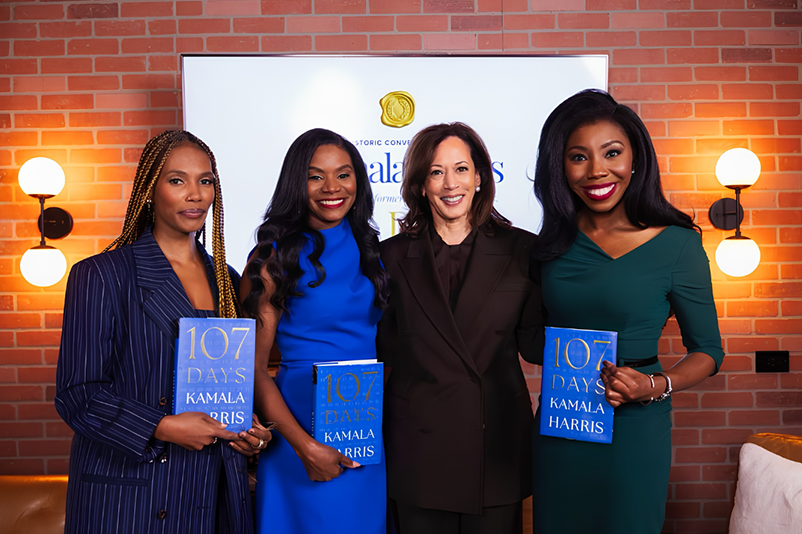
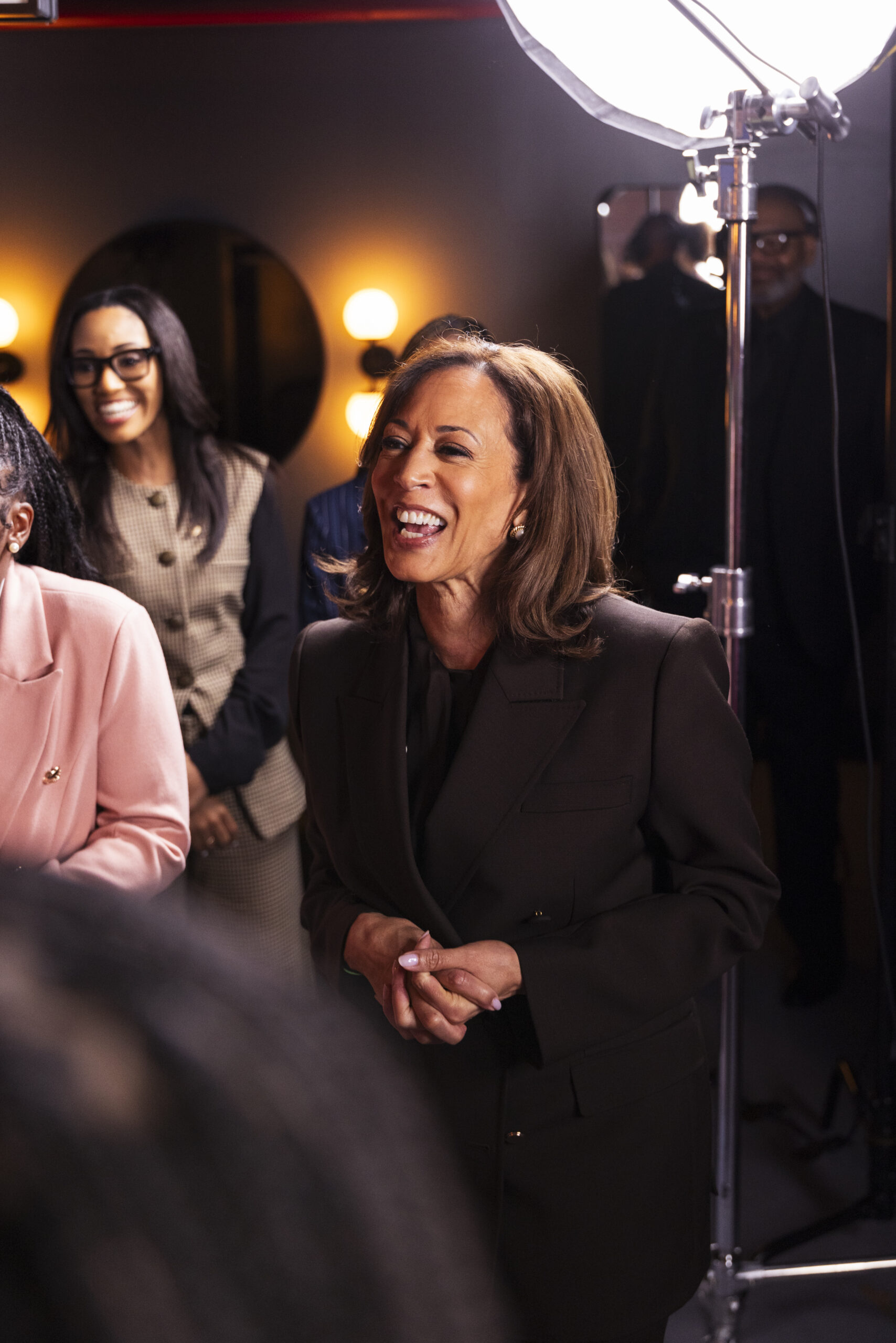
Former Vice President Kamala Harris joins Storehouse & Friends to discuss 107 Days, her account of the 2024 presidential campaign.
The Day Everything Changed
The speed of Harris’s transition from vice president and running mate to presidential candidate is difficult to separate from the ordinary setting in which it happened. There was no ceremonial beginning. There was a family breakfast. A puzzle.
A phone call. Then movement. Harris recalls staff members abandoning whatever they had planned for that Sunday and arriving at the residence as the dining room was transformed into a campaign operation. She began calling political, labor and faith leaders to tell them Biden had left the race, endorsed her and that she intended to run.
The responses, she says, were warm and enthusiastic. But beneath that activity was an awareness of what had suddenly been placed in front of her. “I felt the weight, the gravity,” Harris tells Chapman. A few hours into the day, she realized she needed something beyond strategy.
She called her pastor. They prayed. The detail says something about how Harris describes the beginning of those 107 days. Before the rallies, speeches, polling and relentless decisions, there was a private attempt to become still enough to understand what the moment required.
Everything around her was speeding up. She was looking for somewhere to stand.

“I felt the weight, the gravity.”
-Kamala Harris
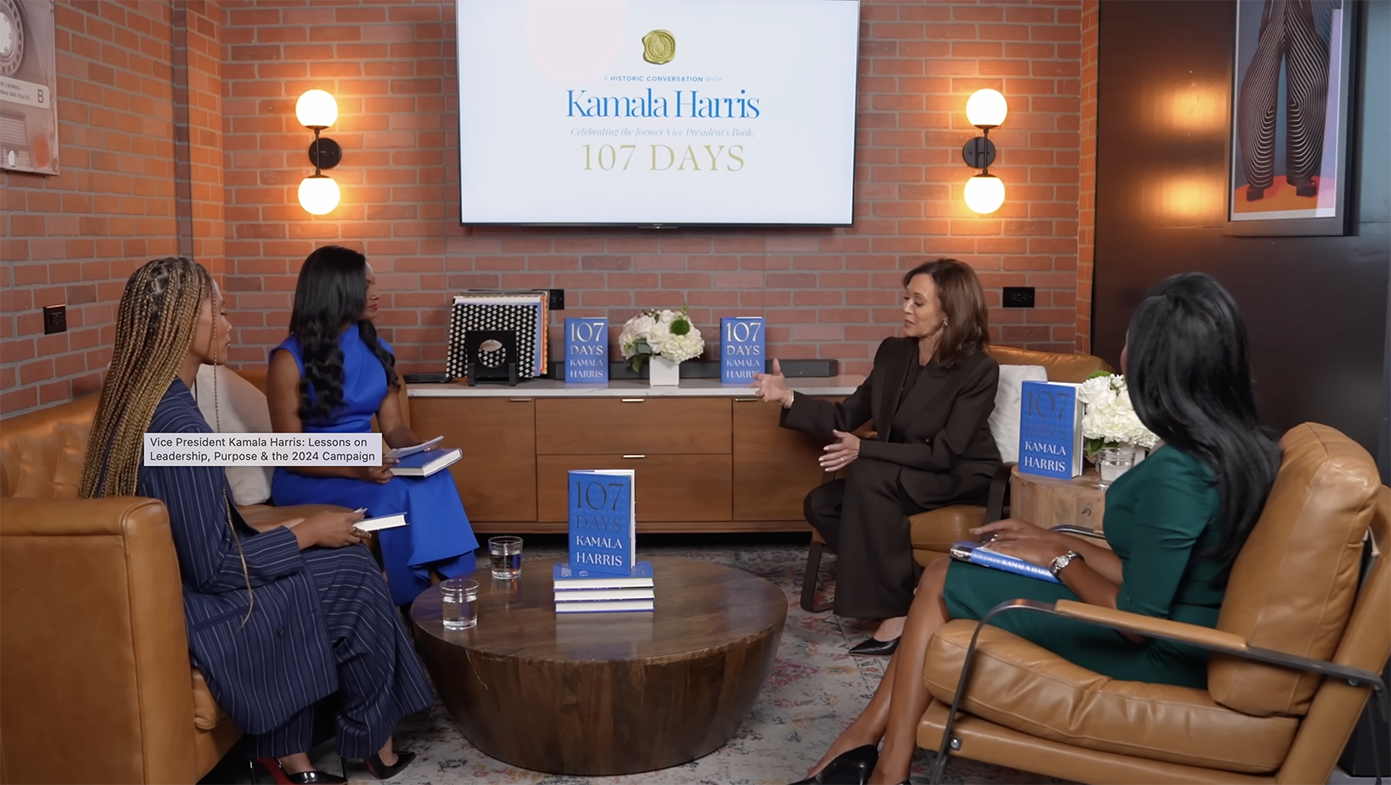
Watch the conversation
Kamala Harris on 107 Days
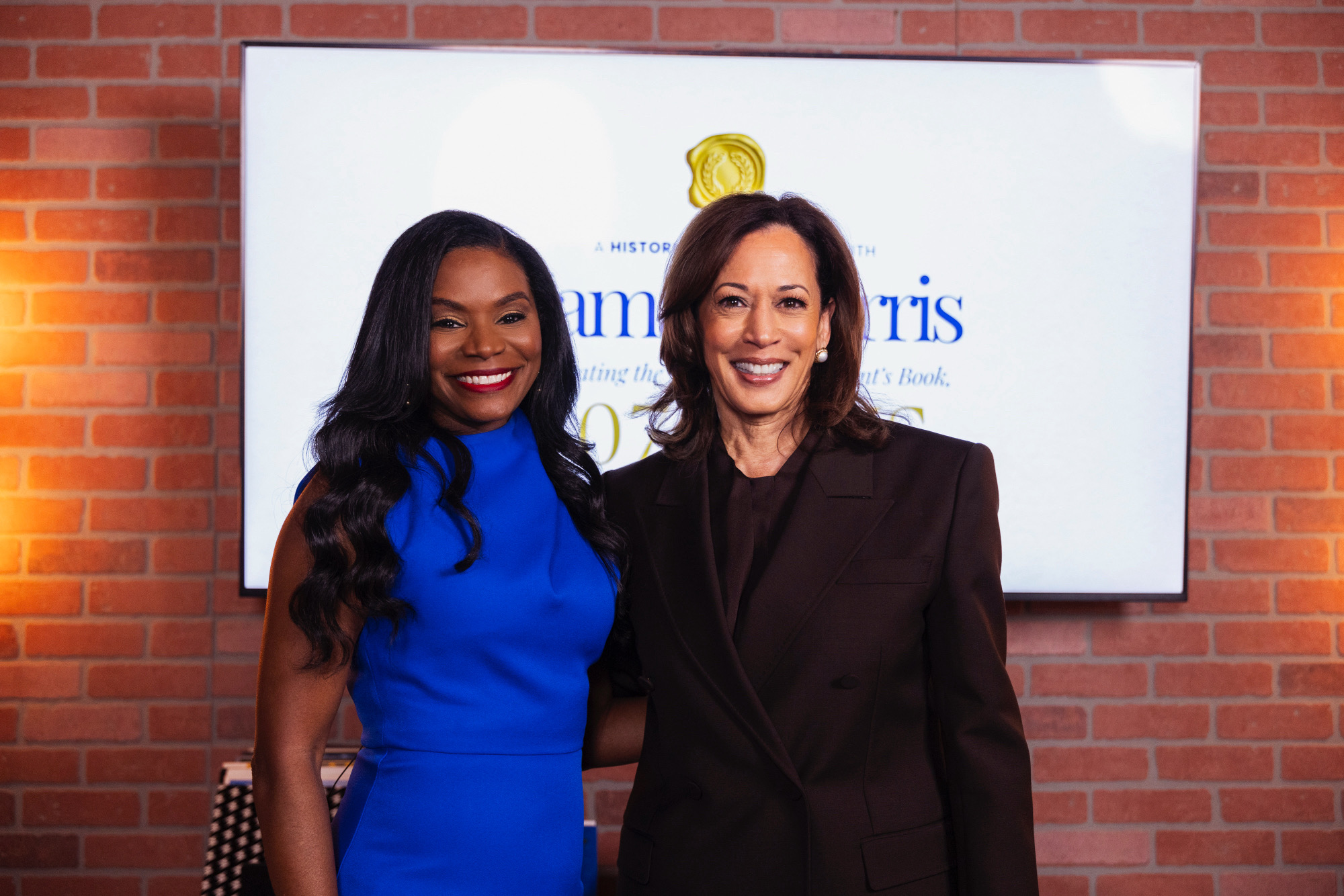
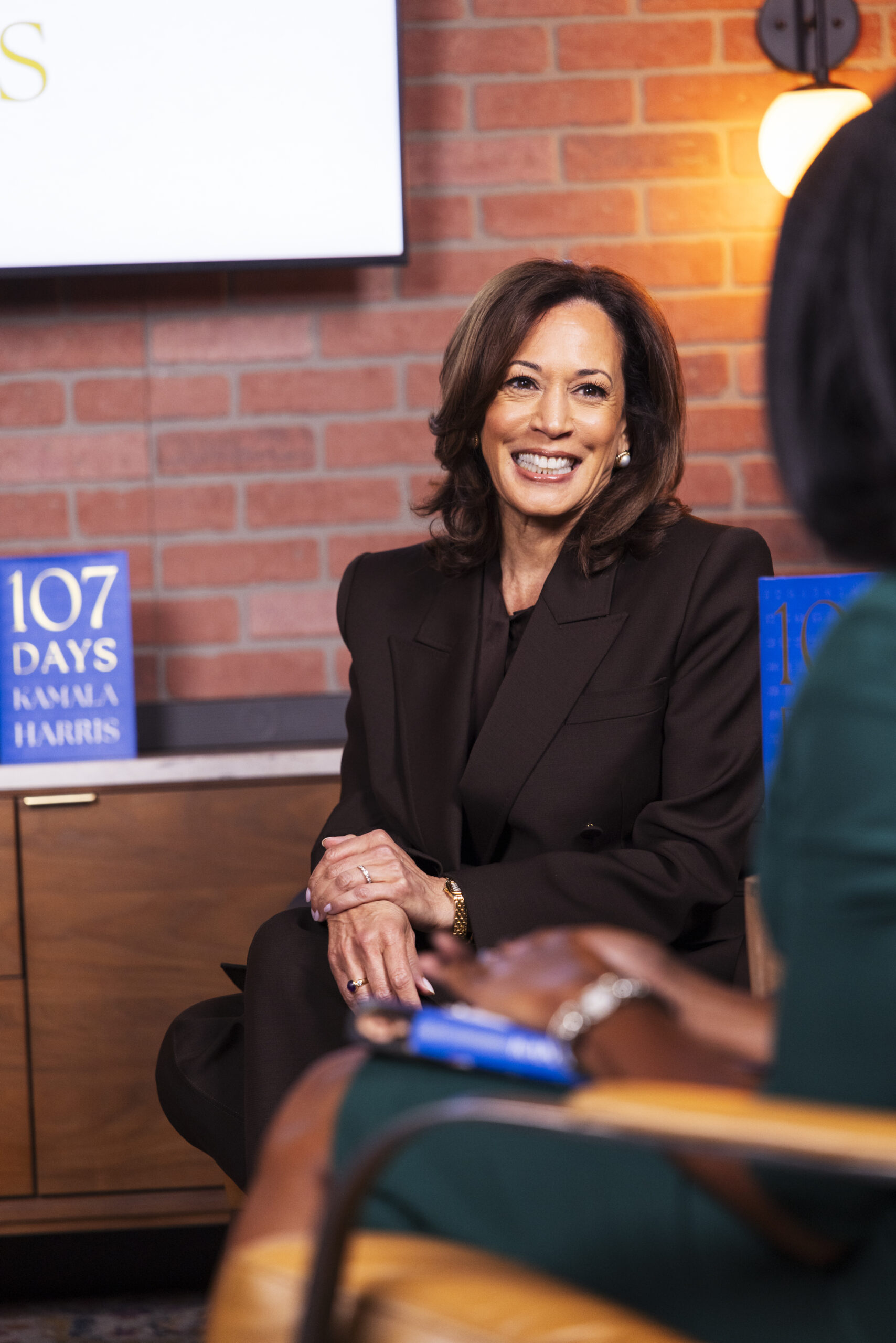
Tamira Chapman joins Kamala Harris for a conversation about the compressed 2024 campaign, leadership under pressure, community, trust and what remains after an election ends.

MORE FROM STOREHOUSE &FRIENDS
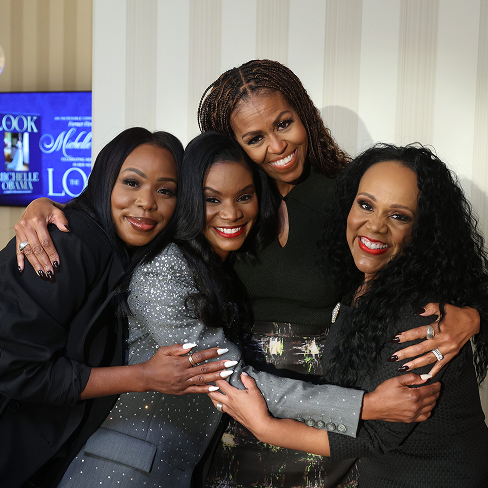

Watch the conversation
Kamala Harris on 107 Days
Tamira Chapman joins Malcolm D. Lee and Morris Chestnut for a conversation about midlife, marriage, ambition, friendship and what happens after happily ever after.
Where Confidence Is Built
If the campaign began in a Howard University sweatshirt, the conversation makes clear that Howard represented more than clothing or symbolism for Harris. She describes the historically Black college experience as one in which students are surrounded by an expectation that they can achieve, lead and contribute. For Harris, that environment helped shape how she understood ambition. The first elected position she ever pursued was freshman class representative at Howard, a campaign she remembers with humor as one of the toughest she had ever run.
But beneath the joke is a larger point. College, Harris says, is often the period when people begin figuring out who they are beyond the families and communities that raised them. At Howard, she encountered people from across the country and around the world while being reminded of the history that made her presence there possible. That came with responsibility.
Service. Excellence. Ambition. Harris is especially direct about the last one.
Young people, she argues, should have their ambition encouraged rather than diminished by forces that make them feel “small or alone.” Her account connects confidence to community rather than individual certainty. Before someone can walk into difficult rooms believing they belong there, there are often other rooms that taught them they did.
The Places Where The Armor Comes Off
The importance of those rooms appears again when the conversation turns to Black women, the Divine Nine and the communities that surrounded Harris during the campaign. Harris remembers a virtual gathering of Black women as a space shaped by shared experience, pride and joy. She also recalls attending a Zeta Phi Beta gathering while running for president and feeling something she rarely had the luxury of feeling during the campaign. Safe.
“When you’re running for president of the United States, you need to put on armor,” Harris says. Inside that gathering, she felt she could take it off. There was an understanding in the room that did not require constant explanation. Harris says she did not have to say very much because the gathering itself communicated what she needed to know.
Then she left. And the armor went back on. That idea of protection carries into Harris’s advice about life beyond politics. When Butler asks how ambitious women can pursue demanding goals without losing themselves or the people closest to them, Harris does not offer a formula for perfect balance.
She talks about choosing people carefully. “Be intentional about creating in your life that safe place,” she says. She describes an innermost circle made up of people who celebrate you, understand you, allow you to laugh, cry and speak freely, and who can pick you back up when life knocks you down. For Harris, resilience is not presented as endless individual strength.
Sometimes it looks like knowing where you are allowed to be tired.
“When you’re running for president of the United States, you need to put on armor.”
-Kamala Harris
Refusing The Roller Coaster
A presidential campaign produces an extraordinary amount of noise. Polling. Media coverage. Criticism.
Strategy. Attacks. Advice. Reactions to the reactions.
Harris says she decided early that she could not allow herself to be governed by all of it. “I made a decision that I was not going to ride a roller coaster,” she says. “I wasn’t going to ride the highs or the lows.” There were only 107 days.
Her response was to narrow her attention. Each night, Harris says, she prayed that she had done everything she could with the day she had been given. She wanted to speak with people, listen to them and explain the policies she believed could improve their lives. During the conversation, she points to home health care as one example, connecting the issue to her own experience caring for her mother during cancer and to people trying to manage work while caring for children and aging relatives.
That focus did not make the criticism disappear. Harris acknowledges that the attacks affected her. “I’m not a robot. I have feelings,” she says.
But she describes trying to locate the campaign inside what she considered a larger purpose rather than treating every criticism as something that required an answer. The same discipline shaped how she approached her opponent. Harris says she believed part of his strategy was to pull her away from her message by provoking responses. Her decision was not to follow.
“I understood the game that was being played,” she says, “and I made a decision that I wasn’t going to get played.” Sometimes discipline is not having the perfect response. Sometimes it is deciding what does not deserve one.
“I wasn’t going to ride the highs or the lows.”
-Kamala Harris
The Work of trust
One of the most revealing moments in the conversation begins with an imagined encounter. Harris is asked about protesters she once passed while traveling in a motorcade. If she had been able to stop the car and speak with them, what would she have said? Her answer is a question.
“How are you doing?” Then more questions. What keeps you awake? What are you afraid of?
What do you hope for? For Harris, those questions connect to something she says has become one of her central concerns since the campaign: trust. She describes two forms of distrust. The first concerns whether people believe government and institutions actually work for them.
The second is more personal. Do Americans trust one another? Harris argues that the problem can reach deeper than ordinary disagreement, into whether people see one another as threats to their way of life or existence. “It’s deep,” she says. “And we have some work to do on that.”
Her answer is not presented as a quick solution. It begins with something considerably less dramatic. Talking. Listening.
And sincerely wanting to know the answer when you ask another person how they are doing. That same conversation about identity and public life surfaces when Butler asks about the position of Black women. Harris says she believes the Democratic Party has taken Black women for granted and points to issues including Black maternal mortality, postpartum care and research concerning fibroids as areas she believes deserve greater attention. At the same time, she rejects the idea that addressing those issues requires separating herself from her own identity.
“I am never going to shy away from who I am,” she says. For Harris, the question is not whether identity belongs in the room. It is what a person chooses to do once they are there.
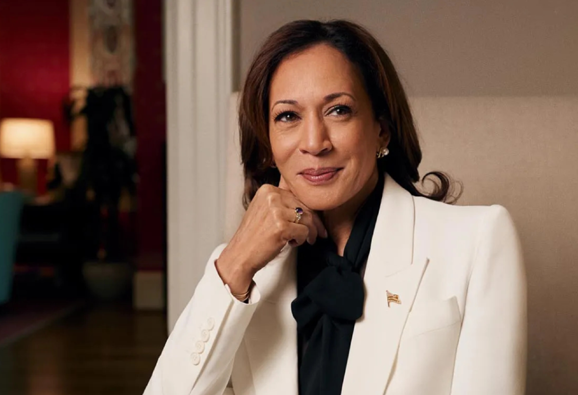
“Remember when you walk in those rooms, we’re in that room with you.”
-Kamala Harris
What Remains After 107 Days
By the end of the conversation, the campaign itself has receded slightly. What remains is what Harris believes people should carry forward from it. She remembers those 107 days as containing optimism, possibility and joy. Then she makes a distinction.
Those things did not belong to the campaign. “That’s in you,” she tells the audience. Her point is that an election result does not possess the power to create or permanently remove a person’s sense of purpose. Harris encourages people who want to remain civically engaged to find their own forms of participation, naming peaceful protest, elections, nonprofit work and community organizations among the possibilities.
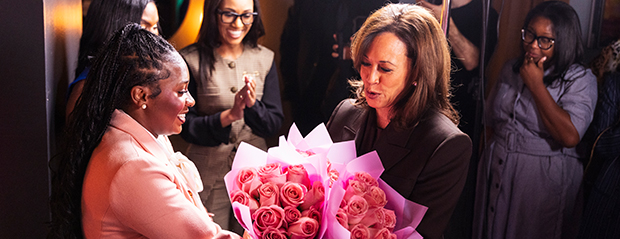
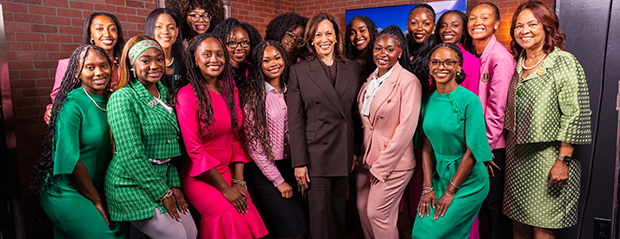
The conversation ends with young women offering Harris flowers and describing what her public life has meant to them. Harris turns the moment back toward them. There will be rooms, she tells them, where they may be the only person who looks like them or carries their particular life experience. When that happens, she wants them to remember that they did not arrive alone.
“Remember when you walk in those rooms, we’re in that room with you.” It is perhaps the clearest expression of the idea running beneath the entire conversation. Individual achievement is rarely entirely individual. Harris tells the story of 107 days through calls answered, rooms entered, people trusted, communities returned to and moments when she had to decide where to place her attention.
The campaign ended. The questions did not. How do you remain grounded when circumstances change overnight? Who gets access to the version of you that does not need armor?
How do you hear people who do not agree with you? And after disappointment, how do you decide what comes next? Harris does not describe 107 days as enough time to resolve those questions. She describes living through them.
And now, in telling the story, she is asking what those days still have to teach.
more from storehouse & friends
Style, Identity, and the Power of Self-Definition
11 MIN READ